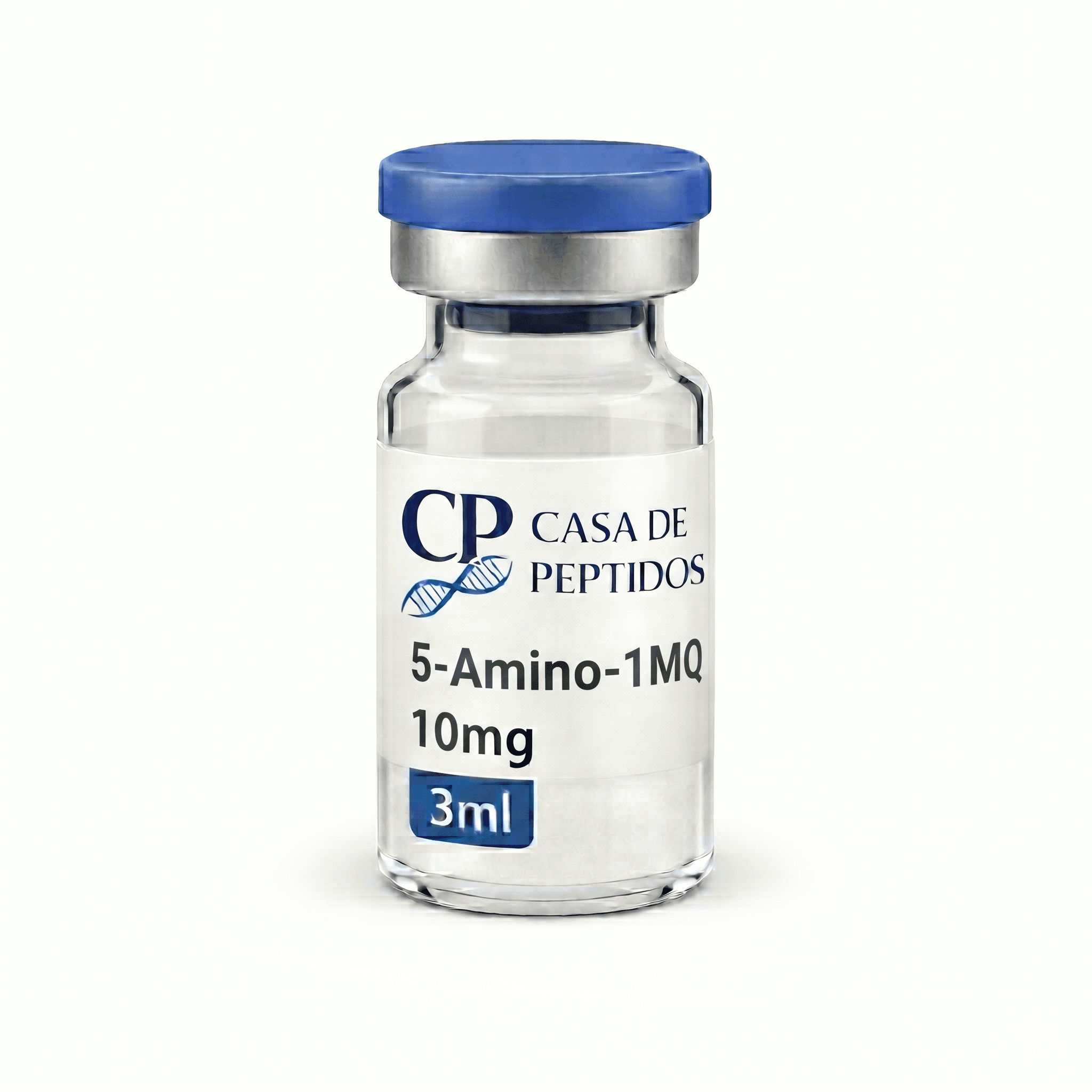
What Is a Peptide?
What Is a Peptide? A Complete Guide to Understanding Its Importance in Scientific Research
Suggested slug: what-is-a-peptide
Meta title: What Is a Peptide? A Complete Guide to Scientific Research
Meta description: Learn what peptides are, how they differ from proteins, what Research Use Only means, and why purity, COAs, and storage are important in research.
Introduction
Peptides are molecules made up of short chains of amino acids joined by peptide bonds. Amino acids are the fundamental components of proteins, and when they join in shorter sequences, they form peptides.
These molecules play an important role in numerous biological processes and, for this reason, have become a topic of great interest within the scientific community.
Today, universities, laboratories, and research institutions study peptides to better understand their properties, structures, and possible applications in biomedical research.
What is the difference between a peptide and a protein?
Although peptides and proteins are made of amino acids, the main difference between them lies in their size and complexity.
Peptides are relatively short chains of amino acids. Proteins, on the other hand, are made up of longer chains that often fold into complex structures with specific functions within organisms.
In simple terms, a peptide can be considered a smaller molecule than a protein, although both belong to the same family of biological compounds.
Why are peptides important?
Peptides have sparked great scientific interest because of their widespread presence in nature and the diversity of biological functions they can perform in different organisms.
Thanks to these characteristics, they continue to be studied in multiple areas of basic and applied research. Peptide research contributes to the advancement of scientific knowledge and helps improve understanding of different biological mechanisms.
How are peptides produced?
Today, many peptides used in research are obtained through highly controlled chemical synthesis processes. After production, each batch may undergo different analytical tests to verify its quality and consistency.
These tests may evaluate aspects such as:
- Compound identity.
- Purity level.
- Consistency between batches.
- Quality of the final product.
These evaluations allow researchers to have characterized materials for their laboratory work.
What does “Research Use Only” (RUO) mean?
The term Research Use Only, also known as RUO, means that a product is intended exclusively for scientific and laboratory research purposes.
Products labeled RUO are not approved for human use, diagnosis, or clinical treatment. This classification helps distinguish materials intended for research from those authorized for medical applications.
At Casa de Péptidos, our products are intended exclusively for research and must not be used for human consumption, diagnosis, treatment, or any clinical application.
What is a Certificate of Analysis (COA)?
A Certificate of Analysis, also known as a COA, is a document that accompanies a specific product batch and summarizes the results of its quality-control tests.
Depending on the manufacturer and analytical laboratory, a COA may include information such as:
- Batch number.
- Analytical methods used.
- Purity results.
- Identity confirmation.
- Date of analysis.
Reviewing the corresponding COA makes it possible to learn the analytical information associated with a particular batch.
Why is purity important?
In research, purity is a relevant parameter because it helps characterize the material used in a study. Purity assessment allows researchers to better understand the composition of the product and verify that it meets the expected standards for laboratory use.
Purity is commonly assessed using recognized analytical techniques, such as high-performance liquid chromatography, also known as HPLC, along with other confirmation methods as appropriate.
Peptide handling and storage
Lyophilized peptides should be stored according to the manufacturer’s specific recommendations to preserve their characteristics during the intended storage period.
Proper handling, together with following storage instructions, helps maintain product quality and stability for research purposes.
Casa de Péptidos’ commitment
At Casa de Péptidos, we believe that quality research begins with transparency, clear documentation, and a commitment to high standards.
Our objective is to offer products intended exclusively for research, supported by quality-control processes and documentation that facilitate the work of laboratories and researchers.
In addition to providing research materials, we seek to share educational information that helps improve understanding of the science behind peptides, analytical methods, and the quality principles used in this field.
Frequently asked questions about peptides
What is an amino acid?
An amino acid is a molecule that serves as a basic component for forming peptides and proteins.
Are all peptides the same?
No. Numerous peptides exist with different sequences, structures, and properties. For this reason, each peptide may be studied in different scientific contexts.
What does it mean for a peptide to be lyophilized?
Lyophilization is a freeze-drying process used to improve stability and facilitate storage of certain research materials.
What does RUO mean?
RUO means Research Use Only. This classification indicates that the product is intended exclusively for research and laboratory purposes and is not approved for human use, diagnosis, or clinical treatment.
Conclusion
Peptides represent an area of great interest in modern scientific research. Understanding what they are, how they are characterized, and what it means for a product to be Research Use Only helps people better interpret the available information and appreciate the importance of quality controls in research.
At Casa de Péptidos, our commitment is to offer materials intended exclusively for research, supported by transparency, clear documentation, and high quality standards.